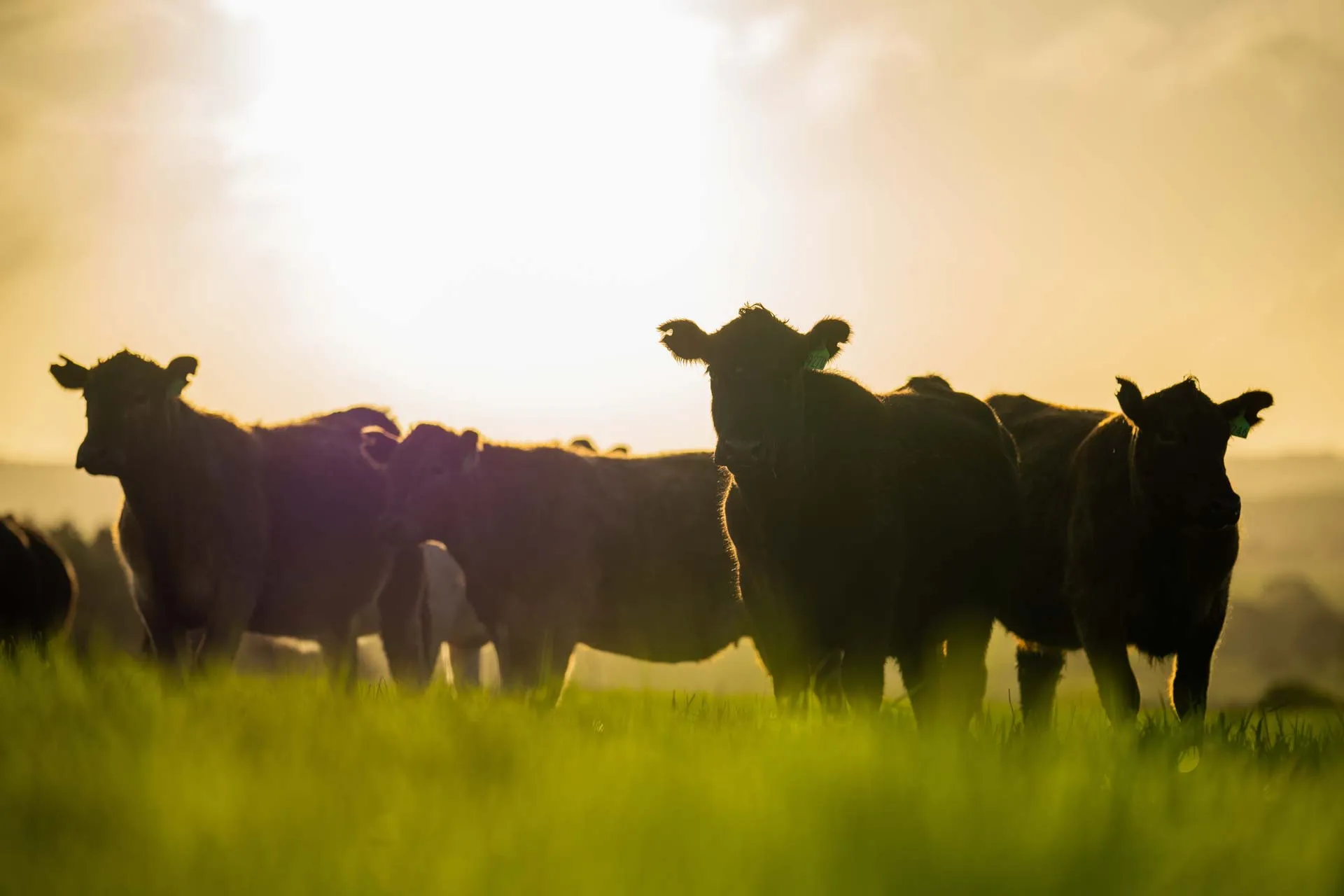
Yoakum, Texas
A ranch that feels more like a park.
We live here with the cattle. That is not a marketing line. It is the reason the animals are calm, and the reason we are glad to have visitors.
- 32 to 34 moAge at harvest
- 210 daysCalves stay with their dams
- Every yearForage tested by Texas A&M
- Twice dailyEvery animal looked at
How we run it
Grass first, cattle second.
Manage the pasture properly and the herd mostly looks after itself. Most of what we do here is grass management that happens to have cattle standing on it.
Pasture
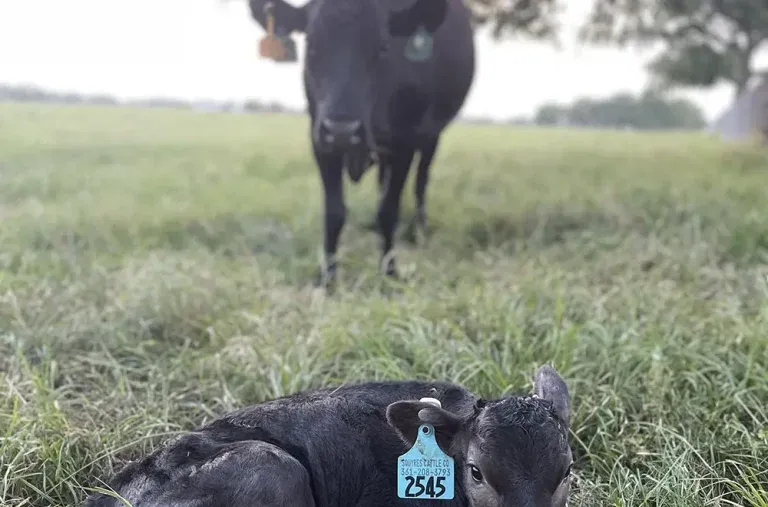
A grass chosen for this ground.
The herd runs on Cheyenne II Bermuda, an improved bermudagrass cultivar, chosen and planted for this ground rather than whatever happened to grow here. The whole ranch is fertilized annually.
Calves get a free-choice 14.5% creep blend formulated for Wagyu and stay with their dams until 210 days. From there the ration is not a matter of our opinion. See below.
Temperament
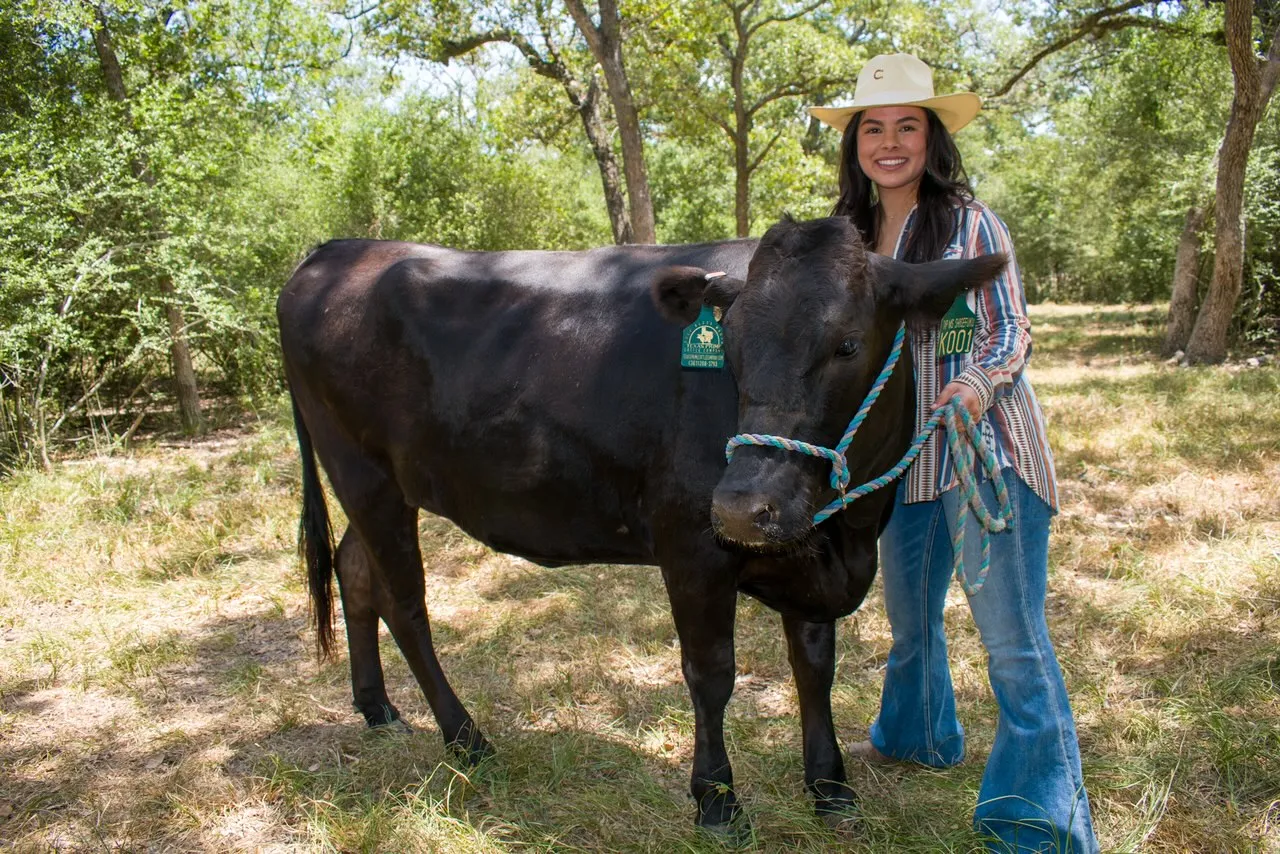
Hand-fed, halter-trained, unbothered.
Unlike operations where cattle go unseen for weeks, we lay eyes on ours at least twice a day. They are hand fed, they have distinct personalities, and many are halter trained.
Every one of them will allow you to approach without startling. That is partly temperament and mostly familiarity, and it makes everything from vet work to loading calmer than it would otherwise be.
They stay with their own herd for life and are never commingled with outside cattle, which is part of why they settle the way they do.
Technology
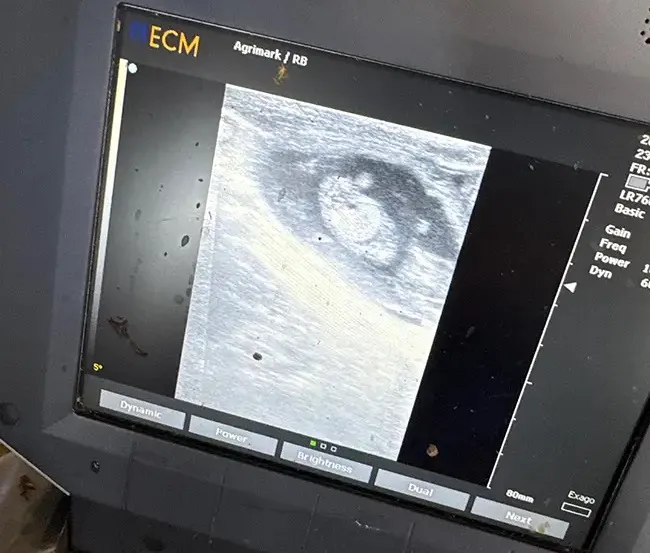
Data we publish, not data we curate.
Every animal is RFID tagged at birth, freeze branded, and tracked in CattleMax from day one. We use fixed-time AI protocols in our own facility, and work with Regan Brooks of Agrimark Genetics in Kingsbury, Texas on embryo transfers.
We publish all of our herd data. We also do not purchase animals from breeders who decline to do the same. If the numbers are not public, there is usually a reason.
Nutrition
We do not guess what to feed them.
Every year the ranch is tested and the ration is rebuilt around the results. What the cattle eat is determined by a university nutritionist, not by habit or by whatever a feed store recommends.
- The samples
- Every year we pull soil, standing forage, and hay from this place and send all three to Texas A&M. Not a single sample as a formality, but the full picture, because what is in the ground determines what ends up in the grass.
- The analysis
- A nutritionist at Texas A&M works through what comes back and tells us exactly what to supplement, both what the forage is short on this year and what to add to close the gap.
- The ration
- We feed to those recommendations. When the analysis changes, the ration changes with it, which is why it is different this year from last.
- The finish
- Cattle are pasture-raised throughout and finished on a grain-based ration built specifically to develop marbling. Marbling is a product of genetics, time, and feed, and this is the feed portion handled deliberately rather than left to chance.
32 to 34 months
is how old our cattle are at harvest. Commercial beef is typically finished near eighteen months. We carry ours close to twice that long, because marbling of this quality cannot be hurried. It is laid down slowly or not at all. That additional year accounts for most of what you are paying for.
Visits
You are welcome here.
If you find yourself in the area, get in touch and we will arrange a time. We are glad to show people the cattle, and buying beef from people you have met is a better arrangement for everyone.
- Ziplines, trails, and a stocked pond
- A four-hole ranch golf course, cattle in the background
- Net wire fencing and whole-ranch surveillance
- Regenerative practices across the entire ranch
Visit
Come and meet the herd.
Get in touch first and we will arrange a time. Bring the children, as there is a good deal more here to do than look at cattle.