The breed
Why this beef is not like other beef.
Wagyu is one of the most misused words in American meat retail. Here is what it means, and what the 100 percent Fullblood part changes.
Start here
Three things worth knowing.
Almost every misunderstanding about Wagyu comes from one of these.
Four breeds
What "Wagyu" actually means
Wagyu (和牛) is Japanese for "Japanese cow" and covers four breeds: Japanese Black, Japanese Brown, Japanese Shorthorn, and Japanese Polled. Nearly all Wagyu outside Japan descends from Japanese Black.
1976 & 1993
How it reached America
A small number of Wagyu were exported to the United States in the 1970s, and a second, larger group in the early 1990s. Every Fullblood animal in America traces to those few imports, including ours.
100%
Fullblood versus crossbred
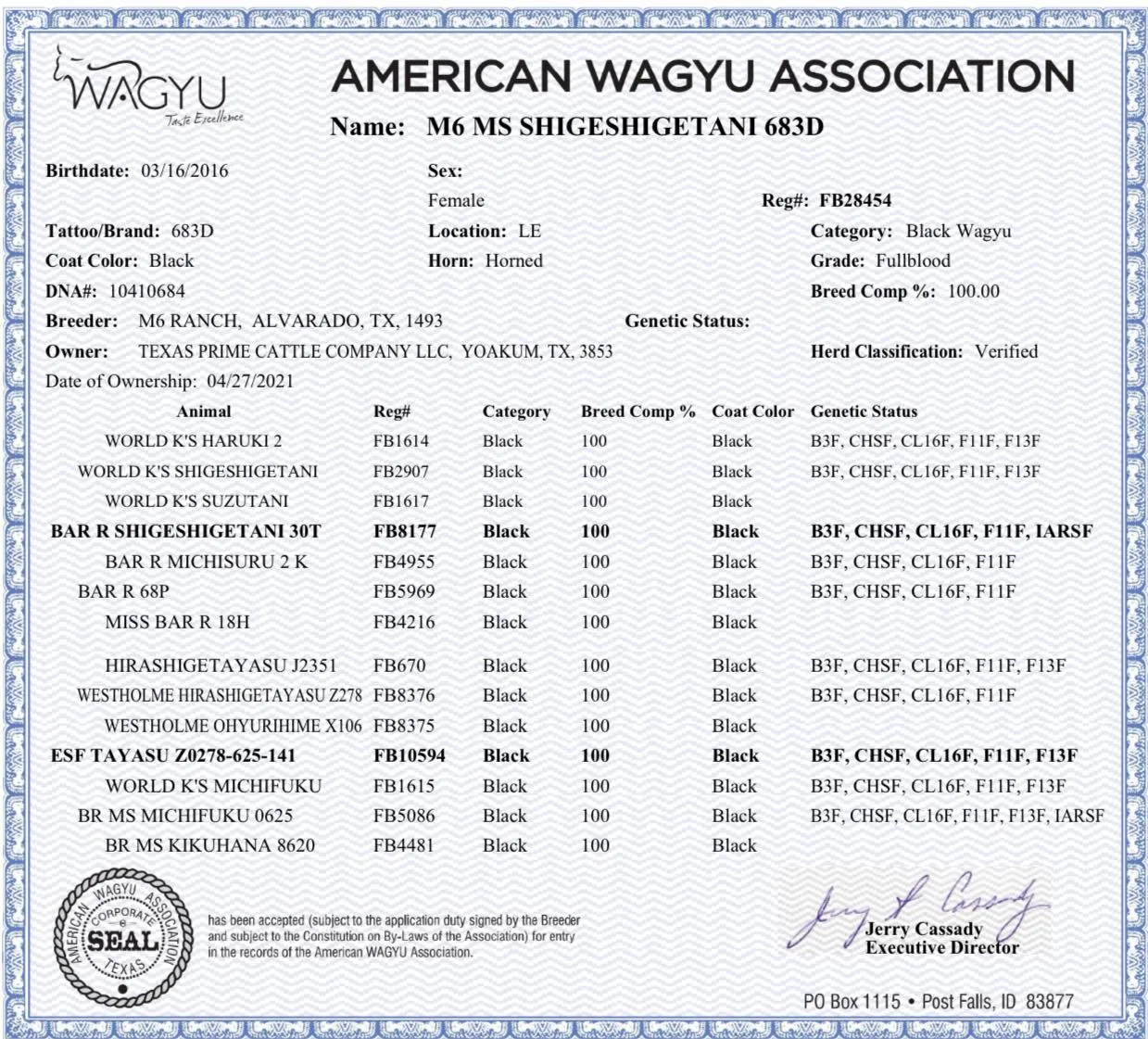
Most American beef sold as "Wagyu" is crossbred, often a half or a quarter Wagyu genetics on an Angus base. Fullblood means 100 percent, DNA verified, with no other breed in the pedigree.
Marbling
Fat inside the muscle, not around it.
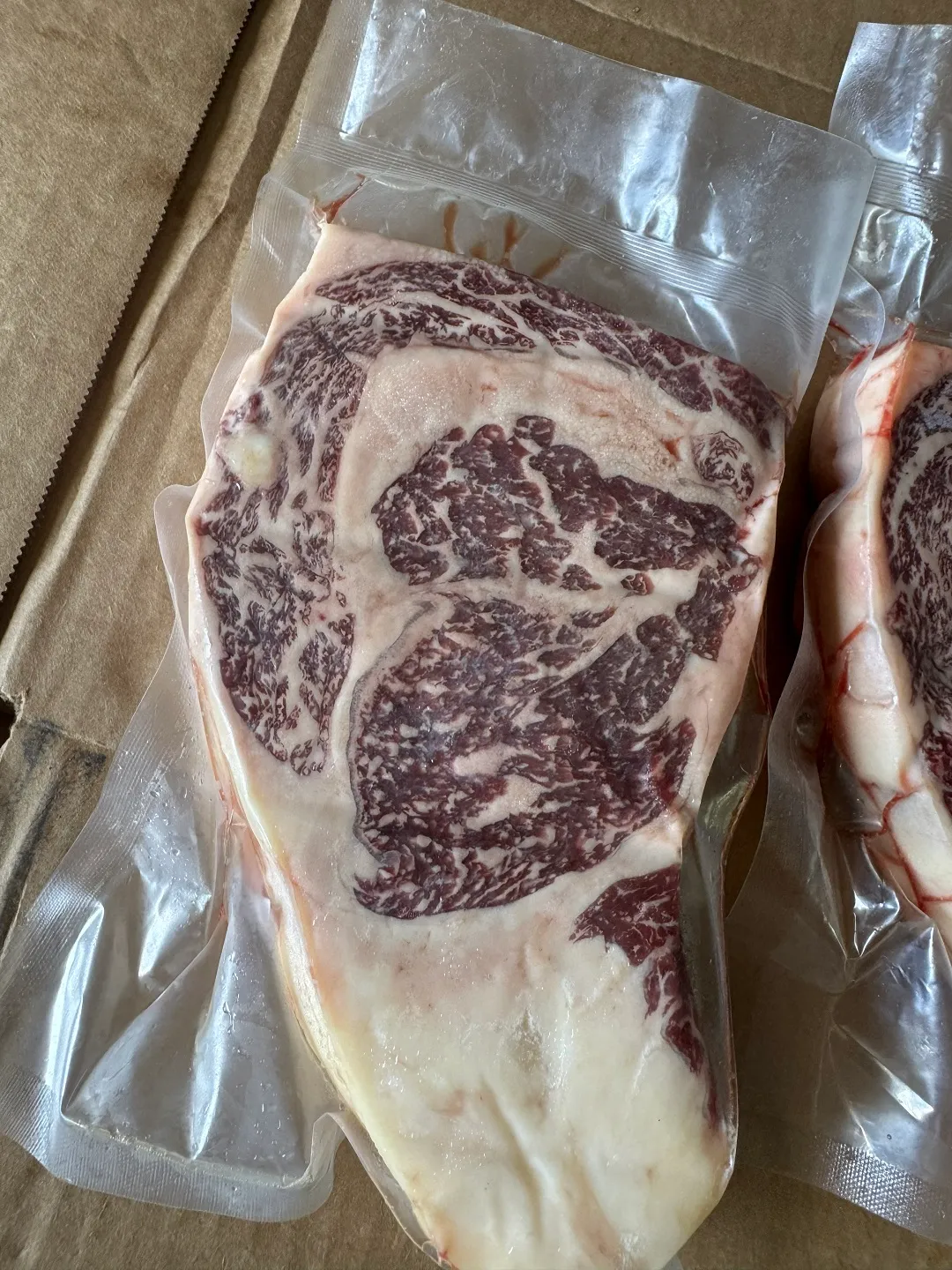
What sets Wagyu apart is intramuscular fat, the marbling that runs through the muscle itself rather than sitting in a rind around the outside. It is a genetic trait, selected for over centuries in Japan, and it is why a Wagyu ribeye looks webbed rather than streaked.
That marbling is also why the beef behaves differently in the pan. It bastes itself as it cooks, which is what produces the texture people describe as buttery.
Genetics set the ceiling; time and feed decide how close you get to it. Ours are carried to 32 to 34 months, against a commercial norm of roughly eighteen, and are finished on a grain-based ration built specifically to develop marbling. Marbling of this quality cannot be rushed.
The fat itself
Not all beef fat is the same fat.
The marbling is not simply more fat. It is a measurably different mix from conventional beef.
- Monounsaturated fat
- Wagyu carries a far higher proportion of monounsaturated fatty acids than conventional beef, the same family of fats found in olive oil and nuts. This is also what gives the fat its low melting point, and why it softens at close to room temperature.
- Oleic acid
- Wagyu cattle are unusually efficient at converting stearic acid into oleic acid, a monounsaturated fat. The ratio of unsaturated to saturated fat is higher than in almost any other red meat.
- Conjugated linoleic acid
- Wagyu contains more CLA than most other beef. It is a fatty acid common enough in the diet that it is also sold on its own as a supplement.
These are compositional facts about the beef, not health advice, and nothing here is a claim that this or any food prevents or treats disease. If you are managing a specific health condition, talk to your doctor rather than a cattle rancher.
Handling
Calm animals make better beef.
Stress raises cortisol, and cortisol degrades meat quality. This is one of the few places where the treatment of an animal shows up directly on the plate.
Ours are hand-fed and looked at twice a day. Many are halter trained, all of them will let you walk up without startling, and calves stay with their dams until 210 days. Transport at the end is short and unhurried, which is the part most operations cannot say.
Try it
The argument is easier to make on a plate.
Start with a few cuts rather than a share if you have never cooked Fullblood Wagyu. We will tell you how to handle it.